

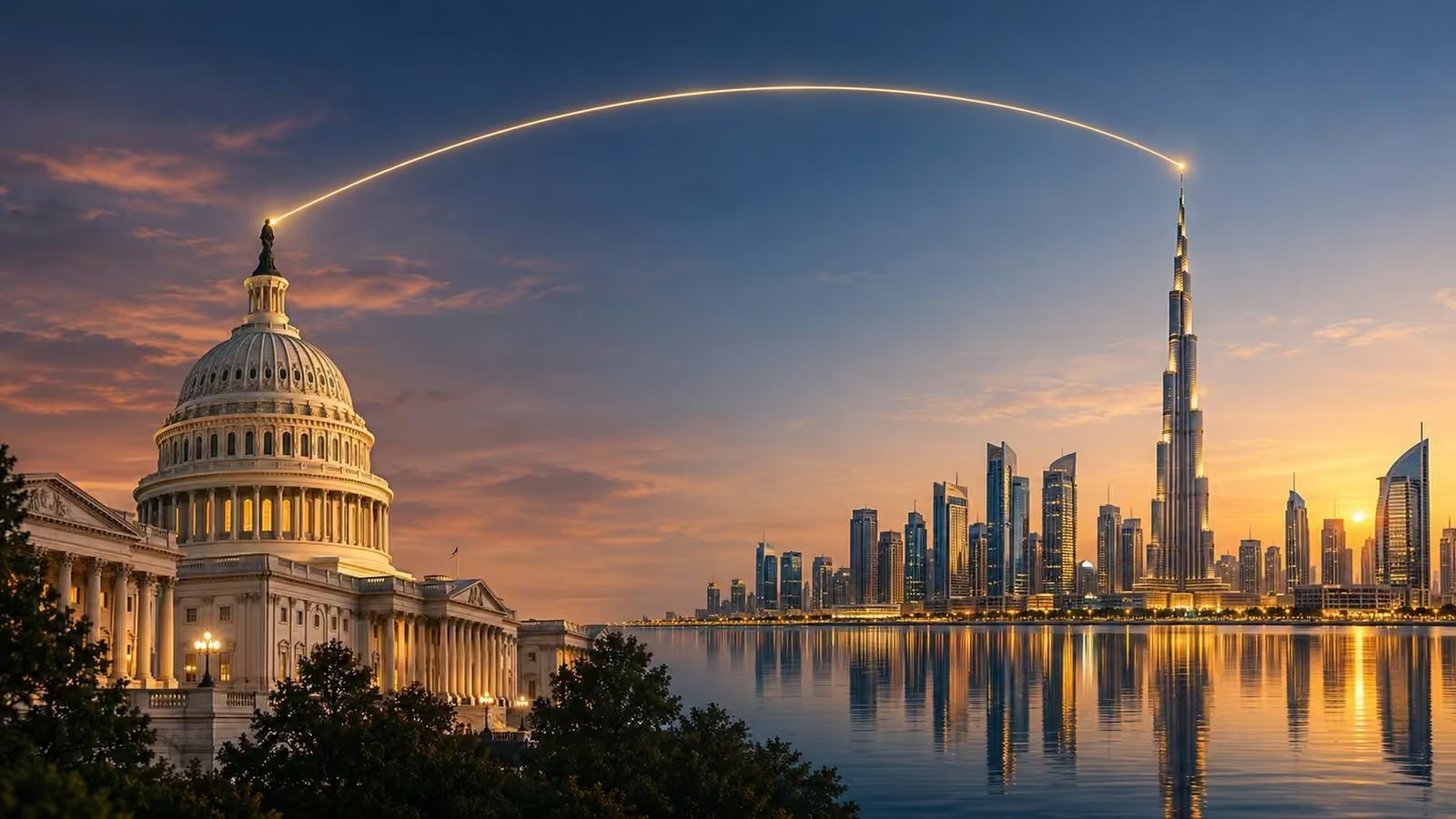
The US midterm elections of 3 November 2026 changed the political map in Washington. Democrats won back both the House and the Senate, a major setback for President Donald Trump and the Republican Party.
So what does this mean for the conflict with Iran that has been running since the end of February? And does it change the outlook for the Gulf and the wider Middle East, the region we live and work in?
One thing first: this article does not aim to support or criticise any party, government or politician. Drawing on publicly available information, we look at how this political shift could affect the security, economy and future of the Middle East, from our perspective as a team based in Dubai.
Election figures are taken from CBS News, The Associated Press and other major US outlets; the Iran situation from Gulf News, TIME, Wikipedia (2026 Iran war) and press reports. Some races were still being counted, so seat numbers are projections. The situation changes daily; please check the latest news before making decisions.
- On 3 November 2026, Democrats won majorities in both the Senate and the House (at least 54 Senate seats, more than 250 House seats projected). The new Congress is seated on 3 January 2027.
- President Trump stays in office until January 2029 and keeps his powers as commander-in-chief and his veto, but Congress gains far more leverage over laws, budgets, appointments and investigations.
- Democratic leaders have named "ending the Iran war" as a top priority and say they will use the power of the purse.
- The Iran conflict began on 28 February 2026; after an April ceasefire, a June agreement and a July collapse, there was still no formal ceasefire as of 7 November. The US announced a "temporary pause" in strikes on 2 November and Qatar is mediating.
- Brent crude has fallen from a peak above $118 in late March to about $98 on 6 November, still well above the pre-war level of about $72.
- In UAE property, transactions are down but prices have fallen only slightly, so this is a market that rewards careful selection. Well-chosen purchases can still find good terms.
The 2026 midterm results: Democrats take both chambers
First, what actually happened. After polls closed on 3 November, CBS News projected at 10:29pm ET that Democrats had won the House majority. In the Senate, Democrats secured at least 54 seats (51 are needed for a majority), with a handful of close races, including Alaska and Mississippi, still being counted on 7 November.
| Item | Details (as of 7 November 2026) |
|---|---|
| Election day | Tuesday 3 November 2026 |
| House (435 seats) | Democrats won the majority, rising from 214 seats before the election to more than 250 (CBS News projected 251–268). Republicans lost around 40 districts |
| Senate (100 seats) | Democrats hold at least 54 seats and retake the majority; some states still counting |
| What voters said | In exit polls, 89% called the cost of living a major or crucial factor; President Trump's approval stood at 38% |
| Republican reaction | President Trump said it was "largely true" that the Iran war cost his party by pushing up petrol prices; Vice President JD Vance wrote, "The reason we lost is the war" |
| Leadership | Speaker Mike Johnson will not seek another term as Republican leader; Democratic leader Hakeem Jeffries is expected to become Speaker |
| New Congress | 3 January 2027 |
Sources: CBS News live results (3–7 November 2026), TIME (5 November). Seat counts are projections.
Why did Democrats win? The cost of living and the Iran war
Several factors were at work: the economy, rising living costs and dissatisfaction with government policy. With around nine in ten voters calling the cost of living an important factor, everyday economics clearly sat at the centre of this election.
Within that, the Iran conflict stands out. The US-Israeli military campaign against Iran that began on 28 February 2026, and the closure of the Strait of Hormuz that followed, sent oil prices soaring. Brent crude rose from about $72 a barrel before the war to more than $118 (closing basis) on 31 March. US petrol passed $4 a gallon, and transport and consumer prices followed.
For American voters, in other words, Iran was not a distant foreign-policy question but a household budget question. After the defeat, President Trump himself acknowledged that the war's effect on petrol prices was "largely true" as a reason for the losses (though he also told Fox News, "I don't think it's the war, I think it's a gasoline price"), while also saying, "If I had to do it again, I'd have to do it again," defending the campaign itself.
The result suggests a growing public appetite for a different approach to these issues.
Does President Trump lose his power?
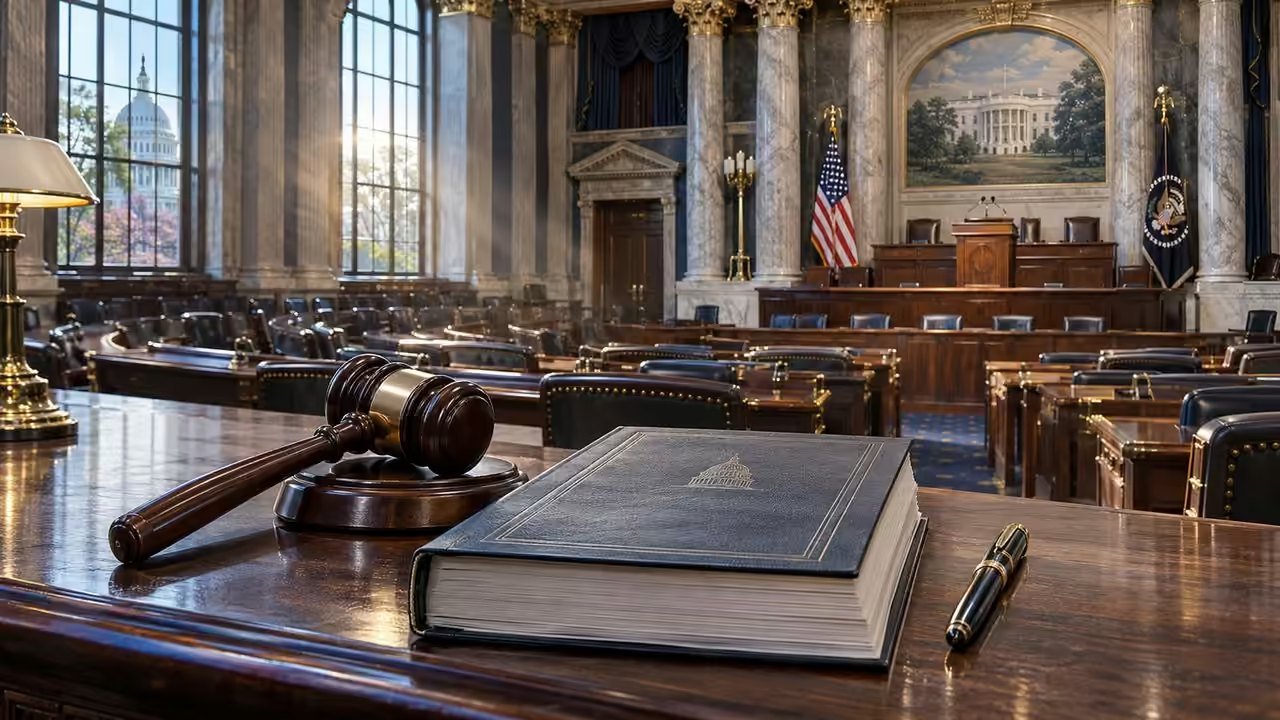
Illustration: Congress controls laws and budgets; from 2027 the balance with the White House changes
No. A midterm election does not remove a president; President Trump's term runs until January 2029. But the balance of power has shifted, and pushing policy through as before will be harder.
The US president is commander-in-chief of the armed forces, leads foreign policy and holds a veto over legislation passed by Congress. Overriding a veto requires a two-thirds majority in both chambers. Democrats will have around 54 Senate seats and roughly 250 House seats, short of the 67 and 290 needed. So the president keeps substantial power.
At the same time, once the new Congress convenes in January 2027, the administration will need Democratic cooperation to pass laws, approve budgets and confirm senior appointments.
| Who holds what | Details |
|---|---|
| Powers the president keeps | Command of the armed forces, foreign negotiations, veto over bills, executive orders |
| Powers of a Democratic Congress | Passing legislation, setting the federal budget, Senate confirmation of senior officials, committee investigations and hearings |
| Overriding a veto | Two-thirds of both chambers; impossible for Democrats alone, so Republican votes are needed |
| Until the new Congress | The current Republican-led Congress continues until 3 January 2027 (the "lame-duck" period) |
In short, the president's powers remain, but the political constraints on using them, and congressional scrutiny, become much stronger.
What can Democrats actually do about the Iran war?
The president has broad authority over military action and diplomacy, but Congress has important roles too. With majorities in both chambers, Democrats can shape Iran policy in several ways, and their leaders have already started.
- House Democratic leader Hakeem Jeffries listed "ending the Iran war" among the new Congress's priorities on 4 November, alongside reversing Medicaid cuts, extending health-insurance tax credits and rolling back tariffs.
- Senate leader Chuck Schumer said the same day, "We are going to end the war," pointing to Congress's power of the purse to cut off funding for the conflict.
- Senator Tim Kaine, who has pushed since the summer to cut off war funding, pledged to keep doing so; Senator Chris Coons drew a line between replenishing US military stockpiles and financing operations that prolong the conflict.
1. Limiting or reviewing military action
Congress can introduce legislation on the use of force and demand explanations for military operations. For action not authorised by Congress, it can seek legal limits through resolutions under the War Powers Act. The House voted on Iran war-powers resolutions during 2026, but they did not pass the Republican-led chamber. From 2027, such measures become much easier to pass, though a presidential veto would still require a two-thirds override.
2. Influencing the military budget
Military operations need money, and in the US system Congress controls federal spending. Through appropriations, Congress can attach conditions to Iran-related spending, redirect funds or impose limits. This is the "power of the purse" Schumer referred to. For context, the war's cost to the United States was estimated at $113.3 billion as of June 2026.
3. Stronger oversight
Democratic-led committees can hold hearings and investigations and require officials to explain military decisions and their consequences. Representative Robert Garcia, the incoming House Oversight chair, has already outlined his priorities. Separately, Republican Representative Thomas Massie plans to force a House vote on impeaching Defense Secretary Pete Hegseth, although President Trump has defended him, saying he is "doing a very good job." This should raise transparency and accountability around the administration's decisions.
4. Influence over key foreign-policy and security appointments
Many senior foreign-policy and national-security posts require Senate confirmation, so a Democratic Senate can affect who the administration is able to appoint.
None of this lets Democrats end the conflict overnight or direct military operations. But the administration's key decisions will face far closer scrutiny and tougher demands for accountability, which could make it harder to continue the current Iran policy unchanged.
Where the Iran conflict stands now: 2026 at a glance
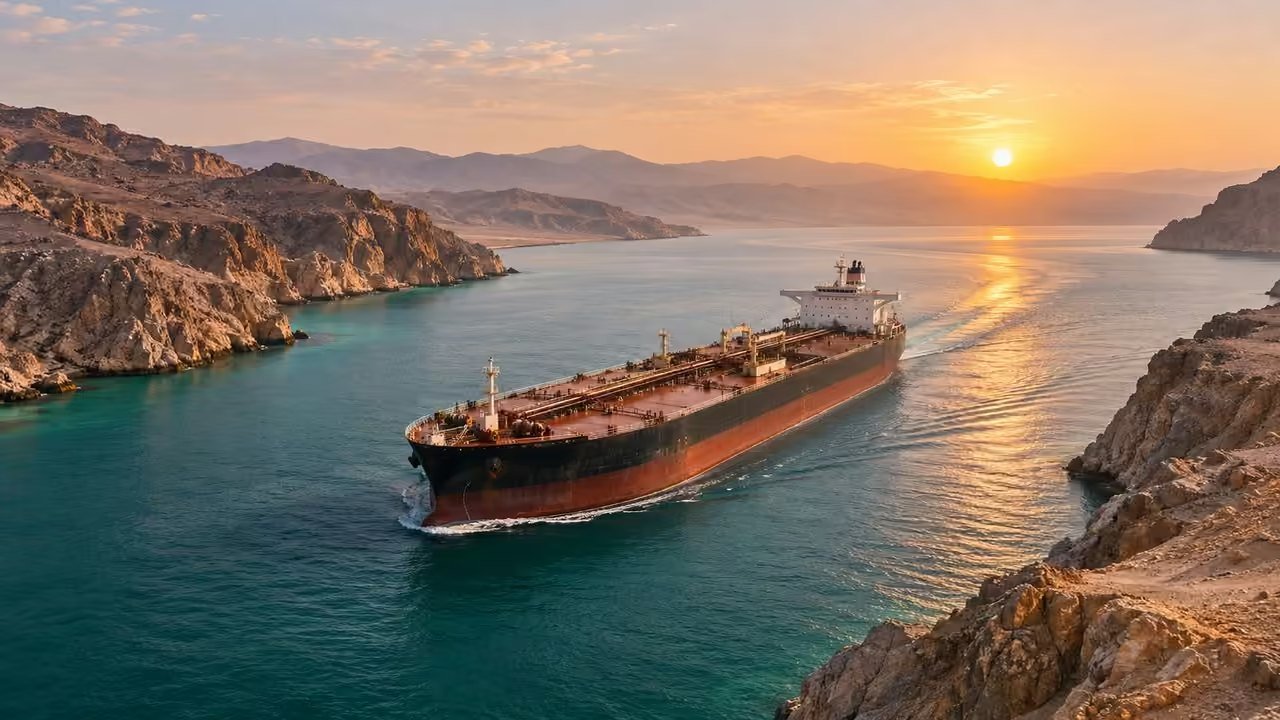
Illustration: about a fifth of the world's oil passes through the Strait of Hormuz, where traffic has been largely halted in 2026
A quick recap of how the conflict has unfolded. For those of us living in Dubai, these eight months have been anything but abstract.
| When | What happened |
|---|---|
| 28 Feb 2026 | US and Israeli strikes on Iran begin the war. Iran fires missiles and drones at US-linked sites across the Gulf; interception debris falls on populated areas of the UAE |
| 28 Feb – early Mar | Dubai International Airport is hit and briefly suspends operations; Gulf airspace closures cancel more than 4,000 flights a day |
| 4 Mar | The Strait of Hormuz is effectively closed. Brent peaks above $118 on 31 March |
| 8 Apr | A Pakistan-brokered ceasefire takes effect; the US begins a naval blockade of Iran on 13 April |
| 17–28 Jun | The US and Iran sign a memorandum to end the war and agree to halt attacks. Brent falls to about $71 on 1 July |
| 8 Jul | The ceasefire collapses after Iran attacks shipping in the strait. The US reinstates its blockade in mid-July; oil returns above $100 |
| Aug–Sep | Tanker attacks continue in the Gulf, including ADNOC-owned vessels in August. Large-ship transits all but stop from September |
| 7–8 Oct | Iran strikes tankers outside the strait, off Qatar and off Fujairah, raising tensions again |
| From 28 Oct | Qatar shuttles between Washington and Tehran. Eight OPEC+ countries hold December output unchanged on 1 November |
| 2 Nov | The day before the midterms, President Trump announces a "temporary pause" in strikes on Iran; oil falls about 7%. US forces also carry out a "limited, defensive" strike on Iranian air defences on Qeshm Island near the strait |
| 3 Nov | US midterms: Democrats win both chambers |
| 6–7 Nov | Brent settles at $98.32. No formal ceasefire; Hormuz transits remain at a handful of ships a day, against more than 130 before the war. Qatari mediation continues |
Sources: Wikipedia ("2026 Iran war", "2026 Strait of Hormuz crisis", "Economic impact of the 2026 Iran war"), Gulf News (4 and 7 November), Euronews (8 October), TIME (5 November), OPEC statement (1 November). Checked 8 November 2026.
As of 7 November there is no formal ceasefire. Iran is demanding sanctions relief, an end to the US naval blockade and the release of frozen funds; Washington says talks continue but has not ruled out further strikes. Oil markets have begun to price in peace, yet some analysts warn Brent could top $120 if strikes resume.
Nor should anyone assume the election result softens Tehran's position. Iran's parliament speaker, Mohammad Bagher Ghalibaf, welcomed the result, saying Americans had "said NO to war," while keeping a hard line. An analyst quoted by TIME noted that President Trump "has accepted the criticism of the cost, but not the premise" of the war, and that Iran now has more reason to seek deterrence than to trust negotiations. Reading the election as a direct path to peace would be premature.
Could this election bring peace closer to the Gulf?
The effect on the Gulf is what interests us most. For the UAE, Saudi Arabia, Qatar, Bahrain, Kuwait and Oman, a stable Iran is a vital interest. Over the past eight months, the Gulf states have felt the conflict directly: missiles and drones, airspace closures, attacks on tankers and a drop in visitors.
A number of Democratic lawmakers have voiced concern about military escalation with Iran and called for stronger congressional oversight and a diplomatic solution. With Democrats now in the majority, political pressure on the administration to favour negotiation over further escalation is likely to grow.
The pause in strikes announced just before the election, and the start of Qatar's shuttle diplomacy, can be read as early signs of that. For the Gulf, this may be a real opportunity to restore security and stability.
Lasting peace, of course, needs more than Washington: it needs Iran, Israel and the Gulf states themselves. In Israel, Prime Minister Netanyahu's governing coalition lost its majority in the 27 October election, and opposition leader Gadi Eisenkot is expected to be tasked with forming a government. It is a rare moment in which the politics of every major player in the region are in motion at once.
Even so, this political shift could well give new diplomatic efforts a push. If tensions with Iran ease, the Gulf may be heading into a period of recovery, stability and renewed growth.
What does it mean for the UAE and the regional economy?
The conflict's impact reaches well beyond the countries directly involved. Regional tension has weighed on energy markets, shipping routes, investor confidence and business activity. A UN Development Programme study in March estimated the war could cost Arab economies $120–194 billion in GDP.
The UAE in particular has built its model on foreign investment, tourism, infrastructure and long-term development. In the first days of the war Emirates suspended all flights and hotel bookings collapsed. Regional security and stability therefore matter enormously here.
If the US political shift leads to lower military tension, several positive effects are possible:
- Stable oil and transport costs: a reopened Strait of Hormuz would calm oil prices and ease fuel, freight and marine-insurance costs.
- Tourism and aviation recovery: British Airways was scheduled to resume Dubai flights from 3 November and the Lufthansa group plans to return from 25 November. Stability would speed up recovery ahead of the winter season.
- Investor confidence: a safer region brings back business and investor confidence and supports inward investment.
- Focus on rebuilding and growth: more money and effort can go to repairing damage, rebuilding infrastructure and long-term development.
Whether these gains materialise depends on diplomacy and on the real security situation. As of 7 November, Etihad has suspended its Riyadh and Dammam routes until 19 November and Hormuz traffic has not recovered. Both the hope and the reality need to be kept in view.
Hope for a more stable future
The 2026 midterms mark a turning point in US politics. President Trump retains substantial power, but Democratic majorities in Congress create a new balance.
That makes decisions on Iran more complex for the administration, and may strengthen the push for diplomacy and de-escalation. Whether that leads to a peaceful settlement is not yet known.
What we believe is this: the Middle East's long-term prosperity depends on stability, cooperation, reconstruction and economic development, not continued confrontation. The region has enormous potential, and the people who live here deserve a future in which money and opportunity go to better lives rather than conflict. We sincerely hope for greater peace and development in the Middle East, and a brighter future for everyone who calls it home.
For investors: the opportunities that uncertain markets create

Illustration: a quieter market is a chance to choose areas and developers carefully
Finally, a word to those considering UAE property.
Experienced investors know that the most attractive opportunities often appear when markets are quiet and many buyers hesitate. We saw this during the COVID-19 pandemic: uncertainty cooled the market, but investors with capital ready and a long-term view were able to buy on attractive terms.
Today's situation is different from the pandemic, but the basic principle holds. When markets are unsettled, keep enough cash available and be ready to move when the right property appears.
Dubai property in 2026, in numbers
Dubai Land Department data show sales transactions in August 2026 down about 36% year on year, while the 2026 year-to-date average price per square foot was still about 4% higher than a year earlier: far fewer deals, but only a limited fall in prices, though quarterly prices have begun to ease. Ejari rental registrations are also up year on year. We think the market since the escalation in March 2026 should be read separately from the market before it. Our full analysis is in Has Dubai Property Stalled? Transactions Down 36%, Prices Up 4%.
Some developers are now offering purchase incentives, special offers and more flexible payment plans. Compared with the intense competition of 2025, there is room to negotiate on some properties and buyers are being offered better terms.
This does not mean UAE prices have fallen sharply across the board. Rather, the opportunity lies in developer incentives, flexible payment terms and the chance to choose carefully.
One lesson from past cycles: investors who wait for confirmation of a recovery often miss the terms that were available before it. When momentum returns, buyers come back, offers end and prices rise.
Those who assess area, developer, project and price carefully now may find properties with real potential for capital gains. Not every property will perform the same way, which is why selection, research and financial planning matter, and why supporting each of those steps is our job as agents.
Has the Iran conflict made the UAE a risky place to invest?
Some will ask whether the UAE remains safe and attractive as a long-term investment. The useful way to think about this is to look beyond the headlines at a country's underlying strengths and at how it responds under pressure.
The UAE still offers no personal income tax and a tax environment that remains favourable for property investors. Throughout this crisis the government has shown a clear commitment to protecting citizens and residents: most missiles and drones were intercepted, schools switched to online learning immediately, and damage to airports and ports was repaired quickly.
That consistent defensive response and the evident priority placed on protecting people say something important: in the UAE, the safety and wellbeing of everyone who lives here is a government priority, not only that of citizens. Not every country can say the same.
No country can eliminate security risk entirely. But the UAE's response shows a government that acts quickly, adapts and protects its people, while continuing to invest in infrastructure, diversify its economy, attract foreign investment and pursue long-term growth. We see this as a sign of the country's strength.
A country's long-term investment value is revealed not only in good times but in how it behaves when tested. Protecting people, continuing to build, responding to adversity and working for regional peace: these are the foundations of the UAE's future.
For investors who trust those fundamentals, a period of market uncertainty can be a time to identify opportunities rather than simply wait for recovery. The point is not to rush. It is to have capital ready, identify properties of genuine value and be in a position to act while favourable terms last. The best conditions in property rarely coincide with the peak of the market; they often appear while most people are still watching.
We remain positive about the UAE's long-term potential, and we hope the country continues to safeguard peace and security while achieving further sustainable growth.
Which areas and developers are a safe choice in today's market, and how much room is there on incentives and payment plans? Our Dubai-based team can answer with the latest transaction data. See also Abu Dhabi or Dubai: where to invest and our visa and relocation services. Message us on WhatsApp.
FAQ
What was the result of the 2026 US midterm elections?
In the 3 November 2026 elections, Democrats won majorities in both the Senate and the House. They hold at least 54 Senate seats and are projected to rise from 214 to more than 250 House seats; a few races were still being counted on 7 November.
Does losing the midterms mean President Trump has to step down?
No. Midterms elect Congress (one third of the Senate and the whole House) and do not affect the president's term, which runs until January 2029. What changes is that Congress gains more leverage over laws, budgets, appointments and investigations.
Can Democrats stop the Iran war?
Not on their own and not immediately. They can pass War Powers resolutions, restrict funding and hold hearings, but a presidential veto can only be overridden by two thirds of both chambers. Democratic leaders have said they will end the war and intend to use the power of the purse.
When does the new Congress start?
On 3 January 2027. Until then the current Republican-led Congress continues.
What is the current state of the Iran war?
As of 7 November 2026 there is no formal ceasefire. The US announced a "temporary pause" in strikes on 2 November and Qatar is mediating. Hormuz shipping remains largely halted and Brent crude is around $98.
Is Dubai safe right now?
Interception debris and airport damage occurred in late February and March, but thanks to the UAE's defences daily life has largely continued since, and airlines are progressively resuming Dubai flights. The situation can change, so check official and airline advice before travelling.
Is now a good time to buy property in the UAE?
It depends on the property. Transactions are down but prices have fallen only slightly, and developers are offering more incentives and flexible payment plans. We see it as a market that rewards careful selection of area, developer and price.
What has happened to oil prices?
Brent was about $72 on 28 February 2026, peaked above $118 on 31 March, fell to about $71 after the June agreement, returned above $100 after the July collapse and settled at $98.32 on 6 November.
Sources
- CBS News: 2026 House election results (Democrats capture majority)
- CBS News: 2026 midterm election updates (Senate, exit polls, reactions)
- TIME: What the midterms mean for the Iran war (5 November 2026)
- Common Dreams: Schumer on the "power of the purse" (4 November)
- Iran International: Democrats demand end to Iran war after midterm sweep (4 November)
- Gulf News: Middle East conflict, key updates for UAE residents (7 November)
- Gulf News: What UAE residents need to know (4 November)
- Euronews: Iran strikes tankers outside Hormuz (8 October)
- Wikipedia: 2026 Iran war / 2026 Strait of Hormuz crisis / Economic impact of the 2026 Iran war
Disclaimer: This article reflects our own analysis of information publicly available as of 8 November 2026 (Dubai time). It does not endorse any party or government. Seat counts include projections for races not yet finalised. Property content is general information, not individual investment advice; prices, developer incentives and returns vary by project and market conditions, and future capital gains are not guaranteed.