

Dubai attracts people and capital from all over the world — not only for property, but also for relocation, visas, company setup and its tax environment. This article organizes four things that anyone who owns (or is about to own) property here should know: (1) relocation and visas, (2) company setup, (3) the tax issues to check, and (4) inheritance and wills, in line with local practice. These are all fast-moving areas, so this is meant to give you the big picture; before acting, please always confirm the latest information with a professional.
1. Relocation and visas
The main visa routes are:
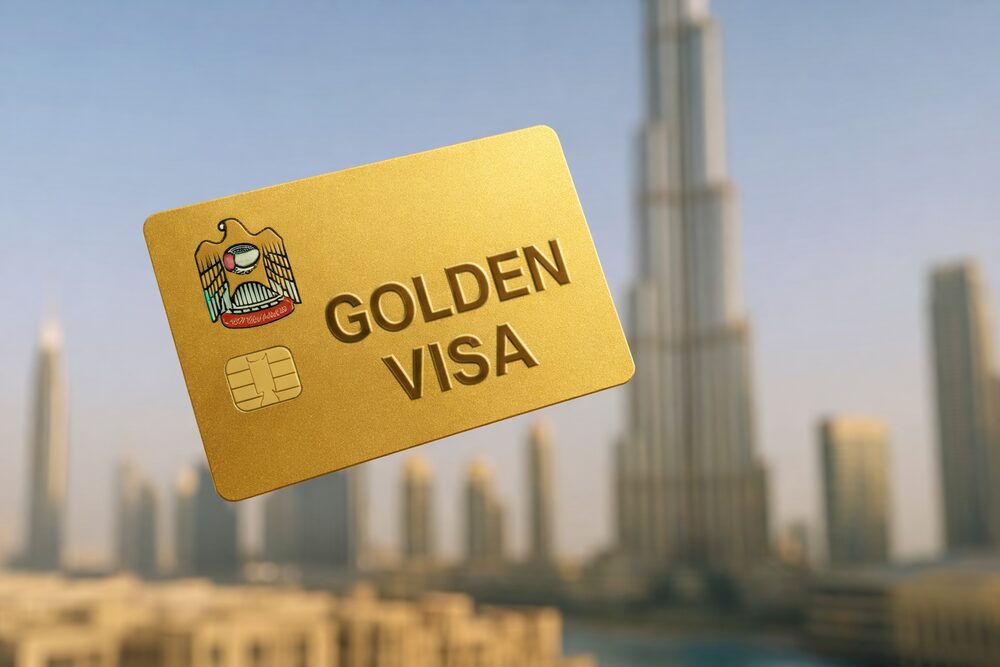
- Golden Visa (10 years): when obtained through real estate, the guideline is a total assessed value of about 2 million AED or more. Valid 10 years and renewable, with effectively no concern about expiry or entry obligations. In practice, off-plan or mortgaged properties may also qualify (requirements were eased in 2026; confirm the latest conditions such as down payment).
- Combining multiple properties is possible: even if a single property does not reach 2 million AED, combining several can. However, all the combined properties are then tied to the visa (so selling any one of them requires handling such as suspending or cancelling the visa). Combining is in principle limited to properties within the same emirate.
- 2-year property-investor visa: a simpler residency. To maintain it, you generally need to enter the UAE about once every six months to a year (the minimum property value requirement was eased in 2026).
- Retirement visa (5 years): for those aged 55+. Financial requirements are one of: property of 1 million AED, savings of 1 million AED, a combination, or (in Dubai) an annual income of 240,000 AED — and health insurance is required.
The Golden Visa actually comes in 5-year and 10-year versions, depending on the category. Many enter via real estate, but there are also other routes. The mainly 10-year categories include the real-estate investor (total value about 2 million AED+), public-investment investor, exceptional specialized talent (doctors, scientists, inventors, cultural and artistic creators, executives, athletes, PhD holders, AI/data/genetic-engineering specialists), humanitarian contributors, frontline contributors, and outstanding university students/graduates. The mainly 5-year categories include entrepreneurs (innovative/technical projects of roughly 500,000 AED+) and outstanding high-school students. For property, "10 years" is the basic rule of thumb.
Family and scope: all of these visas can cover family (spouse and children). Moreover, the Golden Visa can grant visas even to non-family such as drivers or maids.
The Golden Visa via property (practical points)
- Documents are very simple: a Title Deed (or interim title deed / Oqood) and a passport are basically enough (taking it via non-property assets requires more documents, such as proof of income).
- Cost guideline: roughly 8,000–10,000 AED in actual expenses, including minimum insurance (the premium varies with age, and government fees fluctuate). Our support fee is 4,000 AED — and currently free as a campaign for those who buy property through us.
- Time to obtain: the visa alone takes about one week at the fastest; about two weeks including a bank account (over 90% completes in about three weeks). Holidays or issues may extend this.
- Flow: pre-application before arrival (photo, title deed, etc.) → visit Dubai → medical check → visa issued in about a day → fingerprint/signature registration for the Emirates ID → Emirates ID in 2–3 days → SIM card (for SMS verification) → bank account opening.
Note on selling/swapping (the tie-in): a Golden Visa obtained via property is tied to that property. So to sell it, you must first "suspend" or "cancel" the visa. If you immediately swap to an equal-or-higher property (exceeding the visa requirement), there is about a one-month suspension window in which you can buy and tie in the new property without cancelling (suspension requires an application). However, "sell and re-buy within one month" is a tight schedule, so prepare carefully from the start. Simply keeping your current property, buying a new one, and switching the visa tie-in to the new property is no problem.
2. Setting up a company
Free Zone vs. Mainland: a Free Zone suits business aimed outside the UAE (online, etc.) or those without UAE-domestic operations (depending on the zone, activity and license, some UAE-domestic B2C is also possible). Setup and running costs are low and procedures are fast, so many who "just want a visa" set up in a Free Zone. Mainland is for those who want to do serious business inside the UAE — it is more flexible and can do more.
Costs and support: for Free Zones, our support fee is free. Using the well-known Meydan Free Zone, setup is possible from about 12,500 AED. The cost is the same whether you set up directly or through us, so you lose nothing by having our support in English, Arabic and Japanese alongside. For Mainland, the guideline is at least about 20,000–30,000 AED in actual expenses, plus a support fee.
Flow and what you can do: setup alone is fully online — no need to come to Dubai. You do need to visit Dubai when issuing a visa from that company or opening a bank account. A company can obtain a visa (the 2-year investor visa) and open a bank account. Note: decide carefully at the outset which license, and Free Zone vs. Mainland — changing later is not easy. Accounting and tax filing are mandatory; even if no tax is due, failing to file can lead to penalties.
3. The tax issues to check
Dubai (the UAE) is known for low taxes, but it is not "zero." The following are general points; final judgments should always be confirmed with a tax professional.
- Personal income tax: 0%. There is basically no personal taxation on salary, director's remuneration, etc. (fully tax-free).
- VAT: standard rate 5%.
- Corporate tax: 0% on taxable income up to 375,000 AED, and 9% on the portion above that (a permanent system).
- Small Business Relief: businesses with annual revenue of 3 million AED or less can elect to treat taxable income as 0%. However, this applies to periods ending by 31 December 2026, and no extension has been announced (from 2027, the normal "9% over 375,000 AED" applies).
- Filing obligation: even when no tax is due, filing is required.
For reference, standard corporate tax rates are roughly: Japan ~30%, the US ~21%, Singapore 17%, Hong Kong 16.5%, Ireland 12.5%. The UAE's 9% is globally very low, even compared with countries popular among the wealthy.
A note on taxes in your home country
Even if the UAE-side tax is light, taxes in your home country may still apply depending on your tax residency and where your assets and income sit. The rules differ greatly from country to country, so always confirm with a tax adviser familiar with your home jurisdiction. (For readers who are tax residents of Japan, we can also walk through the Japan-specific rules in Japanese.) Typical points to check:
- Tax residency matters most: most countries tax your worldwide income for as long as you remain a tax resident, and residency is usually judged on your actual living situation, not just paperwork. If you stay a tax resident at home, even UAE-sourced income can be taxable there. Genuinely moving your base of life to the UAE and ceasing to be a tax resident at home is normally the starting point.
- Home-sourced income usually stays taxable: even as a non-resident, rental income or sale gains on real estate in your home country, salary from employers there, and similar income typically remain taxable at home (whereas income earned in the UAE generally does not).
- Exit taxes: some countries levy an "exit tax" on unrealized gains in securities and similar assets when long-term residents move abroad. Check whether one applies to you, what thresholds trigger it, and what filings are required before departure.
- Non-residents often lose deductions: in many countries, non-residents can use far fewer personal deductions than residents, so the tax on the income you still earn at home can actually rise after moving.
- Inheritance and gifts: several countries continue to tax inheritances and gifts for years after you move abroad, depending on where the parties live and where the assets are. Do not assume that leaving the country puts you outside these taxes.
- Procedures and missed filings: after moving, you may need to appoint a tax agent or representative to handle filings back home. Forgetting to file or making errors can trigger penalty taxes and surcharges.
- On the UAE side: the UAE has no personal income or inheritance tax, so double taxation basically does not arise. The task is simply to cover, without omission, the taxes and filings that remain on your home-country side.
4. Dubai's distinctive "money" environment (reference)
Beyond property, Dubai (the UAE) offers an environment to place and grow assets (figures and conditions vary; confirm the latest with each provider or a professional):
- Currency stability (USD peg): the UAE dirham (AED) is pegged to the US dollar, so the exchange rate against the dollar is stable.
- Bank deposit rates: on fixed deposits etc., rates of around 4–6% per year can apply (varies by bank, currency and timing; confirm with each bank). That is far above typical deposit rates in many countries.
- Securities account / UAE stocks: with a visa you can open a securities account and buy UAE stocks — e.g. stable government-linked firms (DEWA for power/water, Salik for tolls, Empower for district cooling, parking operators) and major developers like Emaar (Dubai) and Aldar (Abu Dhabi).
- Residents' tax: Dubai residents pay basically 0% personal income tax on personal income (including salary and director's remuneration), and there is basically no personal taxation on stock dividends or capital gains (treatment varies by case; confirm with a tax professional).
5. Inheritance and wills (Dubai wills)
What happens without a will: in the UAE, without a registered will, the inheritance process becomes very long and complex, and how assets are inherited tends to be unclear. There is said to be a risk that Islamic Sharia law could apply to non-Muslims (foreigners), leaving practical uncertainty. To make things clear, registering a will is key.
For foreigners, "DIFC Wills" is reassuring. The DIFC (Dubai International Financial Centre) is a special zone with an independent legal system and courts (DIFC Courts) modeled on common law (as in the UK). DIFC Wills is a will/probate registration system exclusively for non-Muslims, based on the principle of "freedom of testation" — deciding for yourself who inherits what. This lets you avoid the Sharia-based statutory inheritance that might otherwise apply by default, and leave your assets as you wish (the rules are developed with reference to UK law).
- Covered assets: real estate across the UAE (all 7 emirates) can be covered, and UAE-domestic assets in general, such as bank accounts, can be included. Under the 2025 reform (Law 2 of 2025), the DIFC is said to have jurisdiction over the execution of non-Muslims' wills whether the assets are inside or outside the DIFC.
- Guardian appointment: you can also name a guardian for minor children within the will.
- Will types: there are types by purpose — for real estate, financial assets, business, and guardianship.
Cost, flow and effect: a guideline cost (which varies) is a lawyer fee of about 7,000 AED plus a DIFC registration fee of about 10,000 AED — using a lawyer is reassuring. The flow: (1) interview the lawyer (online possible) → (2) draft the contents together → (3) the lawyer registers it with the DIFC → (4) at registration, a brief check via an online video meeting with the DIFC → (5) a witness is required. The will takes effect when the owner passes away. We provide overall support including interpretation and arrangements with the lawyer. Note that the DIFC online meeting requires the person's own attendance — proxies are not allowed — while the witness can be a trusted person you have in Dubai, and we may also attend as witness.
Lifetime gifts (transferring title to family): the UAE has no gift tax. However, gifting Dubai real estate to family during your lifetime (Hiba) incurs a DLD transfer fee of about 0.125% (minimum 2,000 AED) plus a title-deed issuance fee of around 250 AED — far below the usual 4% for a normal sale. It applies to first-degree relatives (parents, children, spouse); gifts between siblings are not covered. Note that gift tax in your home country must be considered separately.
Legal basis (reference): recent legislation underpins non-Muslim inheritance/wills — Dubai Law No.15 of 2017 (governing the management of non-Muslims' estates and the execution of wills, the basis of the DIFC will/probate registry), Federal Decree-Law No.41 of 2022 (the Civil Personal Status Law, providing a framework to apply civil rather than Sharia rules to non-Muslims), and Dubai Law No.2 of 2025 (clarifying that the DIFC has jurisdiction over the execution of non-Muslims' wills whether assets are inside or outside the DIFC). These are overviews; interpretation and application differ by case — always confirm the latest with a lawyer or other professional.
Summary
- Visas: Golden (10 years, ~2 million AED) / 2-year investor / retirement (5 years). Family is covered, and the Golden Visa can also cover staff. The property-based Golden Visa has simple documents. Selling requires suspending/cancelling the visa. Approval is at the government's discretion.
- Company: outward-facing/simple = Free Zone (Meydan from ~12,500 AED; our support free); serious domestic business = Mainland. Setup is online; visa and account need a visit. Accounting and filing are mandatory.
- Tax: personal income tax 0%, VAT 5%, corporate tax 9% above 375,000 AED. Revenue of 3 million AED or less can elect 0% via Small Business Relief (until end-2026). Filing is mandatory.
- Inheritance: without a will, procedures become lengthy and unclear. For foreigners, DIFC Wills is reassuring (about 17,000 AED+ for lawyer + registration).
Disclaimer: This article is general information based on the founder's on-the-ground experience and public sources; it is not tax, legal or immigration advice, and does not guarantee any particular result. Visa, tax, company and inheritance systems change quickly, and visa approval is ultimately decided by the UAE government, so a 100% grant cannot be guaranteed. Currency figures are approximate (1 AED ≈ USD 0.27) and vary with exchange rates. For the latest, accurate details and individual judgments, always confirm with the relevant professionals and official information. Information is as of June 2026.
Relocation, company, tax and inheritance all affect your "peace of mind after buying." Systems do move, but if you grasp the key points and stay connected with the right professionals, there is no need to be overly fearful. We would be glad to organize how to structure things for your specific case in an individual consultation — feel free to reach us via WhatsApp or email.